
If you’re thinking about using AI in your hiring and admin processes, it’s important to step back and get clear on what AI is, what it can do, and what it can’t.

Here, we address some of the common misunderstandings about AI’s use in healthcare hiring and employee support, with insights from several industry experts.
There’s a reason CEOs read our emails
Every few weeks we’ll send the most important info so you stay informed
”AI is not going to replace clinicians, but clinicians using AI will replace clinicians not using AI
Sara Gershfeld
Myth #1
All AI Tools are Created Equal
U.S. tech companies are all in on AI—a recent McKinsey technology trend report shows a $124.3 billion equity investment in AI for 2024. Yes, time-to-hire is of the utmost importance, but that doesn’t mean you should rush out and find any AI tool to reduce it. No matter what staffing challenges you’re facing, it’s important to choose software that’s been ethically vetted and tailored to fit your organization’s needs.
“What we tell our customers is if you’re purchasing an AI tool from us, our legal team is involved throughout the process,” says Dr. Nissa Van Etten, autism therapy expert and Director of Clinical Training and CR Institute at CentralReach, an AI-powered ABA therapy software services provider. “Our number one component is transparency.”
Van Etten urges practices to find tech providers like CentralReach that are honest about how they build and test their products. “Know before you buy it, talk to the people who’ve developed it,” she divulged to us recently. “Make sure you’ve evaluated the bias, check their legal frameworks, and then develop your own AI framework.”
“Do your due diligence, making sure you’ve got someone on your legal team, someone at your executive level understanding what’s the ROI, what’s the impact?” she adds. “And if you do purchase it, how is it going to solve for those problems that you’re having, like administrative burdens and time?”
Myth #2
It Removes the Human Element
“AI is not going to replace clinicians, but clinicians using AI will replace clinicians not using AI,” healthcare and tech industry expert Sara Gershfeld relayed when she recently spoke with us. She has seen that AI is, “A tool to enhance what you’re already doing as opposed to something that can replace you as an individual.”
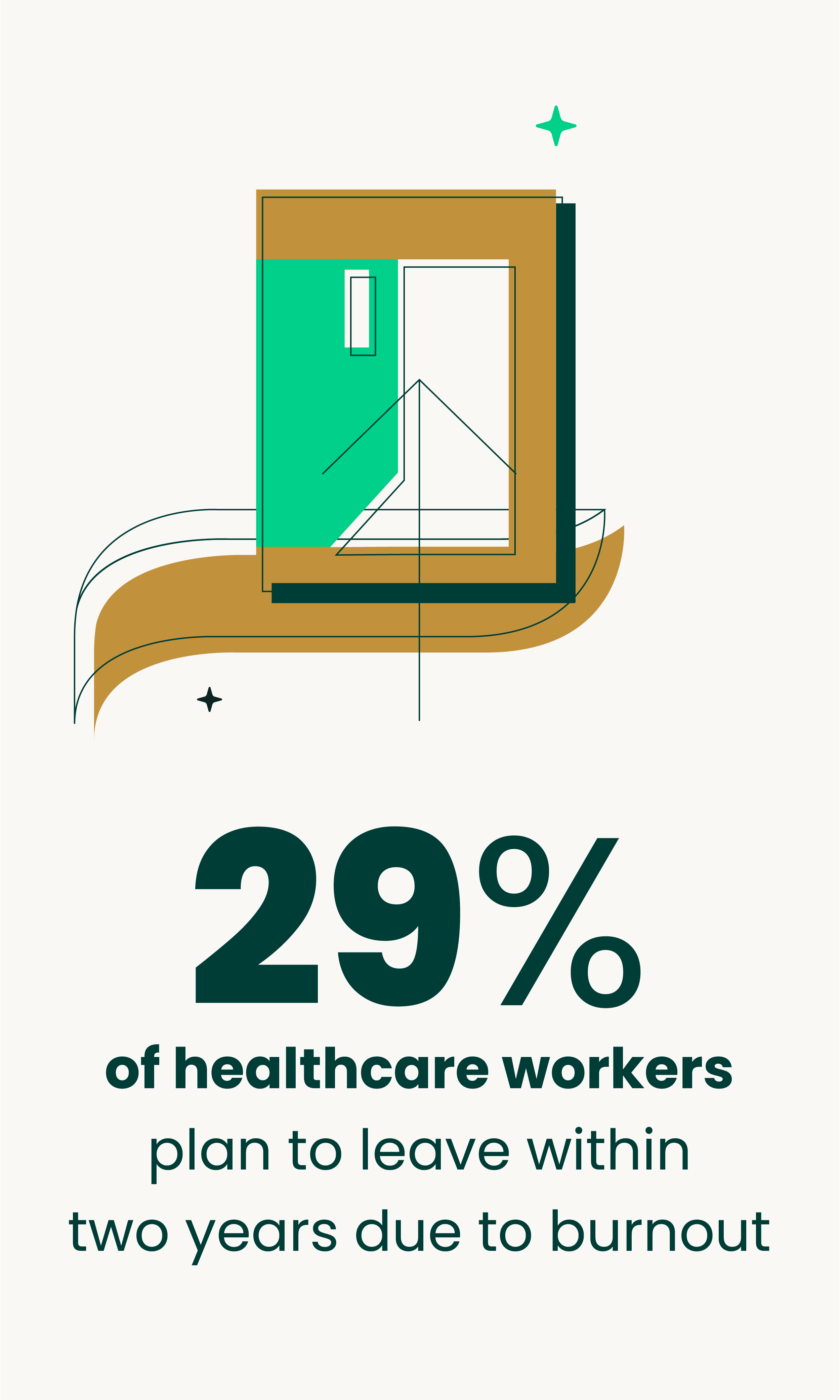
In fact, AI can help you retain the staff you hire—and, with a recent HRSA study reporting that 29% of health care workers and 41% of nurses plan to leave their jobs within two years due to burnout—this is an utmost priority. AI tools applications that handle repetitive tasks like managing records or using session data to create notes can lighten the admin load and free up a clinician’s time so they can focus on their patients, which innovatively humanizes care.
Van Etten agrees. “I think that there’s not going to be a way to remove the humanness to what we do,” she told us. “And I think what we’re all trying to solve is how do we remove the things we weren’t trained to do so we can do the things we’re best at.”
Myth #3
It’s Interchangeable with Automation
Before implementing AI tools, you should understand the distinction between automation and AI. “Automation is very different than AI,” Gershfeld told us. “Automation has existed for a very long time. Just because you have something that automatically does something, it doesn’t necessarily mean that it’s AI.”
Automation is integrated as a shortcut, and it needs minimal to no human assistance—in fact, it’s implemented specifically to replace human tasks. AI needs full human intervention, as well as human training, as it’s created and continually refined to be as adaptable and fluent as the human mind. Think of automation as a task-specific technological bypass and AI as an ongoing technological partnership.
Get your free demo
Apploi is the all-in-one platform to hire, onboard, & schedule top healthcare talent

”If you feed them bland prompts, you get beige mush; if you feed them vivid intent, you get delightful surprises
Randi Zuckerberg
Myth #4
It Eliminates Originality
Finding the right job candidates to care for your patients means looking for the unique experience and perspective they can bring to your team. There’s often a fear that, instead of helping you recognize those nuances in candidates, an AI tool will brush over and filter them out entirely.
Tech pioneer Randi Zuckerberg worried about this at first, as well—but once she experimented with various AI models, she changed her tune.
“I’ve learned they’re mirrors,” Zuckerberg told us recently when discussing her insights about AI’s application in healthcare. “If you feed them bland prompts, you get beige mush; if you feed them vivid intent, you get delightful surprises, even for structured tasks like candidate matching. …The key is curating the inputs as fiercely as you critique the outputs.”
Myth #5
It’s Unbiased and Objective
Because AI is trained by humans, with all their inherent human imperfections, it doesn’t just run on algorithms and data. In fact, AI tools can inherit and amplify biases from their developers, which is why human oversight and checks are needed at every step.
At CentralReach, Van Etten works as part of a team of clinician subject matter experts who make sure each AI product is developed with multiple perspectives in mind. “If one engineer is doing it, then there’s going to be bias,” Van Etten told us. “But if you have a whole team, you can evaluate each other and give more quality assurance.”
This is one more reason why it’s important to implement tools that’ve been rigorously and ethically trained, whether you’re using them to review candidate applications, cut down on paperwork, or create personalized upskilling plans for your staff. The American Medical Association put together this list of their resources to get you started on researching AI’s safe use in care, and CentralReach has an archive of information focusing on its use in ABA spaces.
Better Hiring With Apploi
Apploi’s all-in-one staffing platform is built and optimized specifically for healthcare, fast-tracking your hiring, onboarding, and scheduling to reduce your time by 71%.