
Dr. Nissa Van Etten has supported individuals with autism in a variety of clinical roles for more than two decades. She’s been a credentialed BCBA for 13 years, and is currently the Director of Clinical Training and CR Institute at CentralReach, an AI-powered ABA therapy software services provider that also happens to be an Apploi partner.
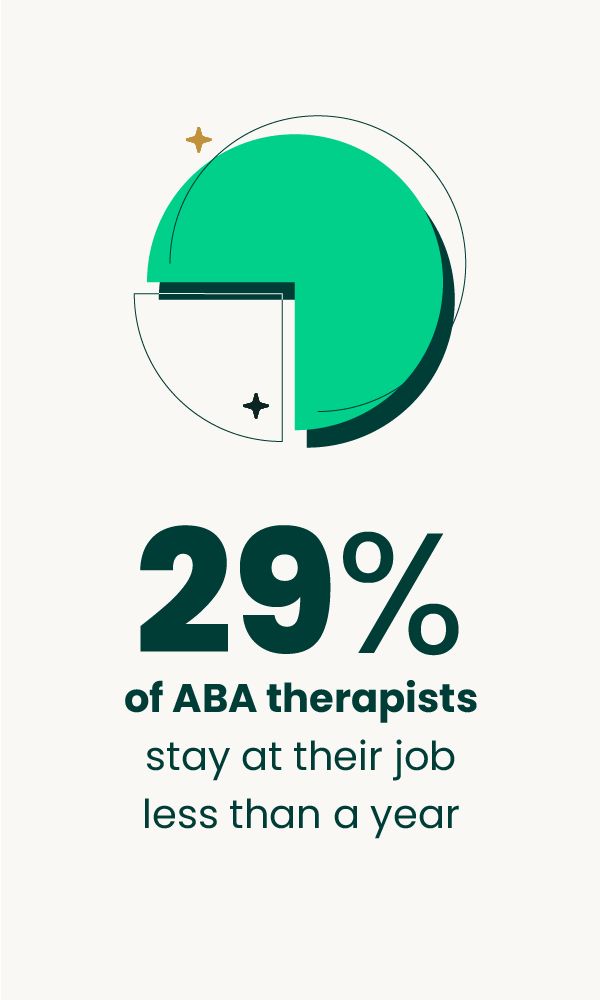
Suffice it to say: Van Etten understands the autism care industry and the many pressures that clinicians are under. She also knows that urgent solutions are needed to lessen their burden—there’s a 65% turnover rate among ABA therapists, and 29% leave their job in under a year. At CentralReach, Van Etten is in a unique position to develop AI-powered solutions for ABA therapists, which she touched on as a key speaker in our Unlocking Growth in ABA webinar.
There’s a reason CEOs read our emails
Every few weeks we’ll send the most important info so you stay informed
We sat down with Van Etten to discuss the subject of AI in ABA, which has gone from a should-learn application to one that is very much “here in the workforce.” She revealed four exciting ways that tech breakthroughs will help therapists deliver better patient care.
Tackling Admin Overload
“I think all organizations are looking for anything that’s going to remove the administrative burden so clinicians can spend more time with the kids and the adults that they are working with,” says Van Etten.
The most popular AI tools at the moment involve low-risk options that don’t directly impact clients, such as: assistance with treatment objectives, hiring, scheduling, clinical decision making, and credentialing.
“Those are all things that are easily done with algorithms,” says Van Etten. “In the years that I’ve been in this field, the time management component is so important. Removing burdens of signing my notes, scheduling my time, those are all things I don’t need to be a part of.”
“It’s a matter of organizational needs,” she continues. “Some orgs are like, ‘Okay, I want to remove scheduling. I’m going to buy a product that just does scheduling for me.’ And some orgs are saying, ‘I want to go ahead and do onboarding and use AI to design the coursework.’ Everything’s going to be individualized to what the organizations need, and removing all of the work that is redundant.”
”I think all organizations are looking for anything that's going to remove the administrative burden
Reducing the Stress of Note-Taking
There are plenty of barriers to care for clinicians at the moment. “There’s this workforce that’s trying to get through school quickly, trying to get onto the floor,” says Van Etten. “Needing to understand the diagnosis, understanding what’s medically required, and then understanding all of the components of owning a case—and time constraints are getting tighter and tighter.”
Pair those with the fact that clinicians have to adhere to funding source requirements, third party review of in-person assessments, and entering session notes within a short allotted period of time so they can be reimbursed by health insurance. “It’s hard to do all of these different things well and not burn out,” says Van Etten.
One major AI advance that addresses that last stressor is CentralReach’s AI generated session notes. Not only are clinicians often not educated on how to write a medically necessary note—which creates a training burden on the practice—but they’re usually rushing from client to client and have no time to take notes in between sessions.
“The AI-generated notes take the data from your session and auto-populates a note according to all of the data,” explains Van Etten. There’s also an ethical component that the company worked to incorporate. “It requires a human in the loop at the end, so you don’t just submit the note, you have to read it to eliminate errors. They can review the data, review the output, and then just sign it and upload it.”
”The responsibility still falls squarely on a clinic when it comes to researching which AI they implement
Assisting with Writing Treatment Plans
Considering that treatment plan creation takes between 30 and 40 hours of a clinician’s time, “I think this is one where everyone in the field would want it,” says Van Etten, of an AI solution—which she believes is just on the horizon.
“Clinicians are the artist painting the picture of the child, and the person at the insurance company reviewing it has never met the child,” she explains. “If your art is messy, they’re not going to appreciate it and they may not approve everything. But if you are the kind of artist that does their due diligence and writes details about the client, the approval will come. Then you can provide more treatment.” Van Etten believes AI will be able to bridge this expression gap, leading to broader coverage for patient care.
But the creation of such AI tech will also require an ethical element. Organizations like CASP create AI guardrails for the healthcare industry, so patients aren’t negatively impacted by the incorporation of these new tools. But the responsibility still falls squarely on a clinic when it comes to researching which AI they implement and making sure the tool comes with transparency and validation from a company’s legal team.
Van Etten notes that this subject is always top of mind for the team at CentralReach. “We’re not releasing anything that’s going to hurt or harm clients,” she says. “We’re bringing in a team of experts to validate every step of the way.”
”I think that there’s not going to be a way to remove the humanness to what we do
Shifting the Focus from Paperwork to Patient
Van Etten feels incredibly optimistic about the advances that AI is making in the ABA therapy space, and how they’ll result in an improvement of patient care. “I don’t think it’s a scramble or a race to the top,” she says. “It’s really about: how do we keep the heart of the science on the learners?”
“Thinking back to when I started in the field 20 years ago, where I was just focused on the learner, there was no technology, there was no having to prove it to a funding source,” continues Van Etten. “I think that there’s not going to be a way to remove the humanness to what we do. And I think what we’re all trying to solve is how do we eliminate the things we weren’t trained to do so we can do the things we’re best at.”
As AI continues to evolve, it’s clear that its greatest potential lies in empowering therapists to do what they do best by reducing administrative burden, empowering them to spend more time with learners, and allowing them to take on greater caseloads. For employers dealing with the rising demand for ABA therapy services, this means improving job satisfaction and reducing burnout, which lowers turnover and increases the quality of patient care.

Streamline Your Own Administrative Process
with Apploi, an all-in-one employment platform that empowers you to hire, onboard, and schedule top ABA talent 71% faster.