
”As an employee-facing department focused on drawing in top talent, you want your facility to look good. By ensuring you have a strategy to stay current on medical reviews and inspections, you can help your facility prepare for whatever comes their way and increase their rating at the same time.
Passing routine audits, accreditation surveys, and health inspections is crucial to maintaining your nursing home’s accreditation and Medicare-certified status so you can stay in business.
Here’s what your HR department should know about skilled nursing facility (SNF) audits, inspections, and ratings via The Joint Commission (TJC) and the Centers for Medicare & Medicaid Services (CMS), and how you can help prepare for them.


Skilled Nursing Facility Audits and Quality Rating System
Together, the CMS and TJC assess skilled nursing facilities’ patient care, quality of service, and provider qualifications.
The TJC survey and auditing process is designed to evaluate accredited nursing care centers once every three years through unannounced visits and documentation reviews that include:
- Assessments of patient safety
- Observations of services and provider or caregiver performance
- On-site or virtual staff interviews
- Physical survey of the facility
- Review of the facility’s ability to maintain updated practitioner documentation
The CMS tests nursing home quality levels using a five-star quality rating system, which is updated regularly on its facility comparison site, Nursing Home Compare. The site organizes nursing homes by rating and helps consumers and their families and caregivers choose the right facility. This rating system gives each nursing home a score of between 1 and 5 based on these major factors:
Tips for Audit and Inspection Preparation
With audits and inspections now top of mind, this is an excellent time to review resources and optimize your facility’s approach.
As an employee-facing department focused on drawing in top talent, you want your facility to look good. By ensuring you have a strategy to stay current on medical reviews and inspections, you can help your facility prepare for whatever comes their way and increase their rating at the same time.
Here are a few ways your team can improve compliance and maintain your SNF’s quality rating:
Educate Staff About Documentation
All nursing home facility staff should be on the same page when it comes to documenting and reporting care. Consider holding a staff meeting to go over the main points of documentation with your attending physician or RN in charge. During this meeting, emphasize the importance of documenting elements like:
- History of reticent care and behavior towards care
- The skilled services provided
- Need for services based on resident’s condition and situation
- Resident’s response to services
- Future care plan
All documentation should be legible and report care clearly and accurately.
Improve Employee Satisfaction
Satisfied employees mean a better work environment and fewer complaints from residents, which can negatively impact your quality rating. Positive work cultures have been linked to better work attendance and performance, workforce retention, and mental health. It pays to ensure that your RNs, LPNs, CNAs, and other staff members are happy, healthy, and able to attend fully to their work.
Work with your staff to ensure that they’re getting what they need, whether that means flexible scheduling or healthy food on late-night shifts. Check in about their mental health and ask what resources you can provide to help them combat burnout.
Assess Your Technology
Both the CMS and TJC have expanded their reliance on virtual technology since COVID-19. CMS has a Virtual Audit Management System and TJC conducts virtual surveys and accreditations. In preparation, conduct a thorough review of the technology you have set up for videoconferencing, sharing electronic health records (EHRs), and accessing and sending staff documentation securely. Be sure that any solutions you use meet HIPAA and state data privacy and security regulations.
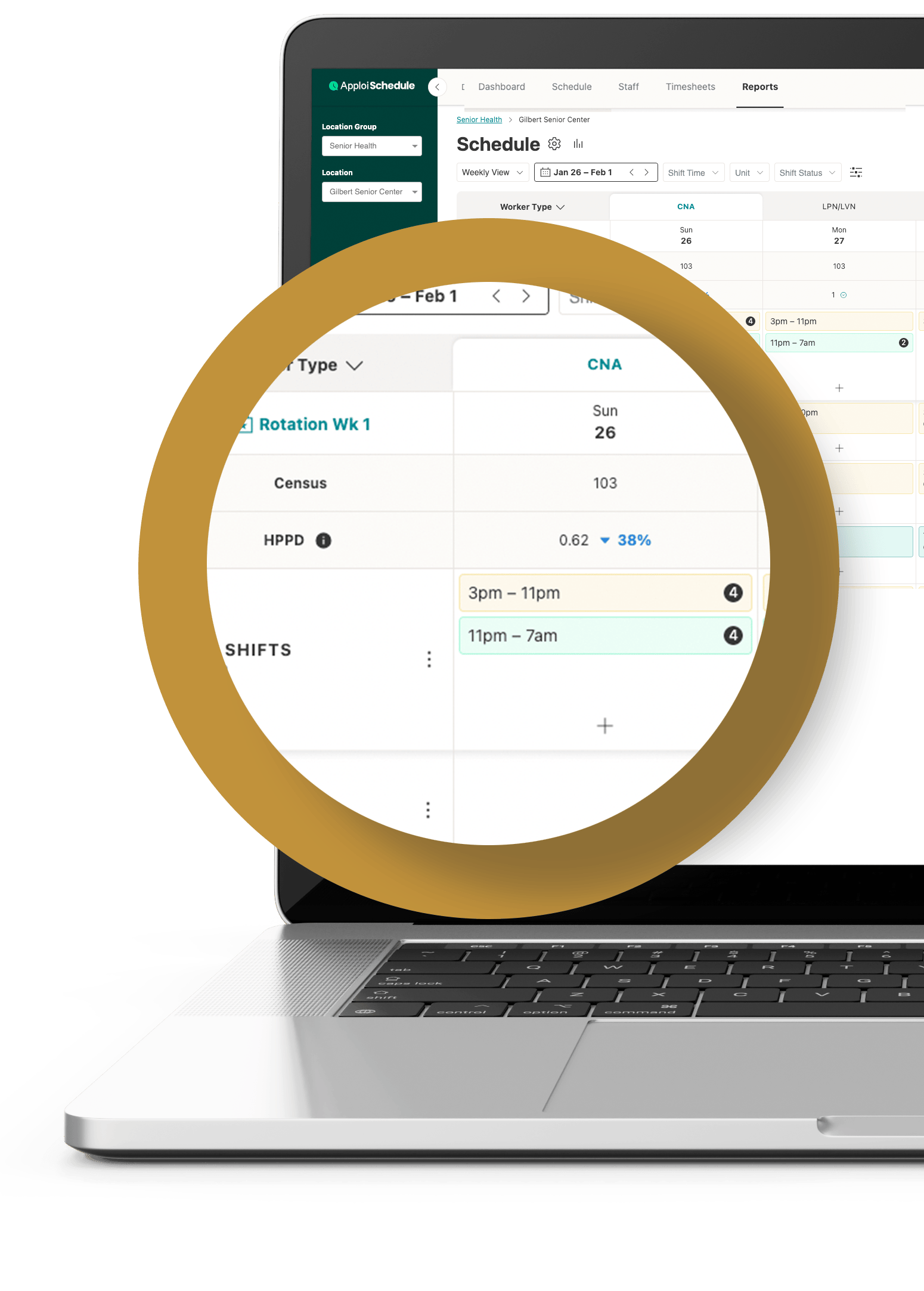
Apploi Schedule calculates staffing ratios (HPPD) in real time as you create schedules, helping your facility stay compliant from the start.
Emphasize Time and Attendance
Keep HR Documents Up-To-Date
Audits can happen at any time and you never know what additional records or information may be requested. This could include additional documentation on the patient, their condition, and the services provided, or verification of nursing staff’s state and federal licenses, certifications, and credentials.
TJC in particular will examine your nursing staff’s ability to provide patient care based on their qualifications and accreditation compliance standards.
Review your employee screening and documentation monitoring processes from verification to renewal. And remember that primary source verification rests on you, so take care that your credentialing policy guidelines are clear and easy for every department and location to implement.
Focus on Retention
In July 2022, CMS announced that staffing and turnover data would be used in assessing star ratings for facilities. As CMS administrator Chiquita Brooks-LaSure stated, “research and experience tell us that staffing levels and staff turnover can substantially affect quality of care and health outcomes for people living in nursing homes.”
Retention has long been a practical concern for long-term care facilities, but now the issue is increasingly under the spotlight. Focus on your retention by offering creative and enticing benefits, such as flexible scheduling and flexible benefits. Also, focus on creating career opportunities for your employees, so they stay within the facility instead of seeking career growth elsewhere.
Get your free demo
Apploi is the all-in-one platform to hire, onboard, & schedule top healthcare talent

Types of Nursing Home Audits
As an administrator, you’ll likely oversee many different types of audits. Here are some of the most common ones.
How are you storing employee docs?
As you help prepare your facility for potential audits and inspections, it’s also a good idea to take a closer look at your system for storing and submitting documentation.
Resident Assessment Instrument (RAI)
The Resident Assessment Instrument is a comprehensive assessment tool used to evaluate the needs of nursing home residents. RAI audits focus on the accuracy and completeness of resident assessments, including the collection and documentation of information related to the resident’s physical, mental, and psychosocial health. These audits aim to ensure that residents’ care plans are individualized and based on accurate and up-to-date assessments.
Falls Risk Assessment
Falls are a significant concern in nursing homes, as they can lead to serious injuries and complications. Falls risk assessment audits evaluate the nursing home’s procedures for identifying residents at risk of falling and implementing appropriate interventions to prevent falls. These audits assess whether fall risk assessments are conducted regularly, documented properly, and used to develop personalized care plans to minimize the risk of falls.
Medication Management Audit
Medication management audits focus on the safe and effective administration of medications to nursing home residents. These audits assess whether medication orders are properly documented, medications are stored securely, and administration procedures follow established protocols. They also evaluate medication reconciliation processes, medication error reporting, and staff training related to medication management.
Infection Control Audit
Infection control audits are conducted to assess the nursing home’s adherence to infection prevention and control practices. These audits evaluate hand hygiene practices, proper use of personal protective equipment (PPE), cleaning and disinfection procedures, and compliance with isolation precautions. The goal is to identify areas where infection control practices can be improved to minimize the risk of healthcare-associated infections among residents and staff.
Staffing Audit
Staffing audits focus on evaluating the nursing home’s staffing levels and skill mix to ensure adequate staffing for resident care needs. These audits assess compliance with staffing requirements set by regulatory agencies, review staff qualifications and training, and evaluate the nursing home’s processes for monitoring and maintaining appropriate staffing levels. The goal is to ensure that there are enough qualified staff members available to provide safe and quality care to residents.
Digitizing HR Files for Easy Access With Apploi
As you help prepare your facility for potential audits and inspections, it’s also a good idea to take a closer look at your system for storing and submitting documentation. Your personnel records may be up-to-date, but are they as accessible as they could be?
Many HR departments still handle paperwork manually, with paper folders and filing cabinets rather than a centralized system. And while this may still work for some, it can get tricky if you’re juggling multiple review requests or multiple facilities.
Digitizing files in a central location can help you avoid unnecessary compliance violations and simplify employee management. With access to all files at once, your facility can stay organized, prepare ahead of time, and have all the documentation you need at your fingertips, just in case.
Apploi brings the healthcare HR process online, from recruitment to staff documentation management. Interested in learning more? Contact us today for a free demo of our end-to-end solution.